

Back
 October 7, 2025
Digital Marketing After 12th: A Beginner’s Guide to High-Paying Careers & Top Diploma Courses
Introduction
This is for students in India who have just finished 12th and want a fast, credible way into high-paying digital roles without wasting months on vague theory. Because employers and agencies judge you by campaigns, content, and numbers—not by attendance alone—you should pick a digital marketing course for beginners that makes you build real assets on a schedule. Therefore the right diploma in digital marketing after 12th forces you to launch small campaigns, track results, and present outcomes like a junior professional. But many programs teach definitions without deliverables, so you end up knowing words but not work. In order to start earning quickly, you’ll choose a course that grades you on live work: ads that spend, pages that convert, and reports that explain what changed and why.
What employers actually check (and why this matters after 12th)
Hiring managers open links before they read your resume because links prove reality. Therefore your learning path needs public proof of skill, not just completion certificates. But proof only counts if it is attributable to your actions and tied to business outcomes. So your first goal is a small, verifiable portfolio that shows your work moved a metric on a live project in order to make interviewers say “we can put this person on an account tomorrow.”
Build these three proofs early:
- Traffic proof: a tracked landing page with Analytics + UTM links driving visits from at least one channel (search, social, or email).
- Conversion proof: a form or WhatsApp click event with conversion rate documented before/after an optimization.
- Reporting proof: a one-page report with spend, clicks, leads, or sales plus a short “what we changed” narrative.
High-paying career tracks you can target after 12th
You don’t need ten specialties on day one because depth in one track gets you hired faster. Therefore pick a lane that matches your strengths and stack adjacent skills as you grow. But don’t pick by hype; pick by the kind of work you want to do for hours without getting bored. So start with one of these roles in order to build compounding expertise and income.
Role options that hire beginners with proof:
- Performance Marketing Associate: runs paid campaigns (Meta/Google), manages budgets, and hits cost-per-lead targets.
- SEO & Content Executive: ships intent-matched pages, improves rankings, and grows non-paid traffic.
- Social Media & Creatives Coordinator: produces short-form video, carousels, and hooks that convert, not just “likes.”
- Email/CRM Junior: builds automations, segments lists, and lifts repeat purchases or demo bookings.
- Analytics Assistant: sets up tags/pixels, validates events, and builds dashboards that teams actually use.
Skills a beginner diploma must teach (so your work moves numbers)
Digital marketing is a system, not a set of slogans. Therefore a best diploma course for beginners should map skills to measurable outputs. But you can’t optimize what you can’t track, so analytics must come first. In order to avoid busywork, each module should end with a live asset and a metric improved.
Core skill map with tangible outputs:
- Analytics & Tracking: GA4, pixels, UTMs → verified events on a real page.
- Offer & Landing Pages: value proposition, copy, forms → page published with <3-second mobile LCP.
- Paid Media Basics: campaign structure, targeting, creative testing → ad set launched with daily spend and learning notes.
- SEO Foundations: keyword intent, on-page, internal links → two indexed pages with Search Console baselines.
- Social Content: hooks, scripts, editing → 6–8 posts with reach/save metrics and A/B captions.
- Email/CRM: welcome sequence, lead magnets → 3-email flow with open/click benchmarks.
- Reporting: simple dashboards, weekly summaries → one-page report linking actions to outcome.
A 16-week plan from zero to billable (while you study)
You make progress when every week ends with something someone else can click. Therefore treat your diploma as a delivery schedule, not a lecture schedule. But don’t spread across five channels at once; focus on one primary and one supporting channel. So follow this plan in order to convert learning time into portfolio assets and early income.
Weeks 1–4: Foundations + First Wins
- Set up GA4, Search Console, Meta/Google pixels; validate with test events.
- Launch a simple landing page (Link-in-bio or single-screen site) with one CTA.
- Publish 4–6 social posts or two SEO pages; record baselines (impressions, CTR, CVR).
Weeks 5–8: Campaigns + Copy That Converts
- Run a small paid test (₹200–₹500/day) on one channel; test 3 hooks × 2 creatives.
- Add lead capture (form or WhatsApp), thank-you event, and auto-response.
- Ship your first case snapshot: spend, leads, CPL, learning, next steps.
Weeks 9–12: Optimization + Second Channel
- Improve page speed and above-the-fold clarity; cut form friction.
- Add email welcome flow or SEO comparison page; log before/after metrics.
- Produce a “wins & losses” review to show your iteration process.
Weeks 13–16: Packaging + First Clients/Internships
- Assemble a portfolio: two mini-case studies and one playbook (checklists + templates).
- Pitch 10 local SMEs or startups with a scoped, low-risk offer (see below).
- Sit mock interviews; refine your narrative (“problem → action → result”).
How to choose the right diploma or course (and avoid regret)
You pick better when you demand deliverables because deliverables are hard to fake. Therefore ask providers how they grade live work, not how many hours they teach. But promises without proof waste time, so verify student outcomes you can click today. In order to protect your investment, run this filter.
Selection checklist for a diploma after 12th:
- Live projects or no pass: landing page + tracked campaign required by Week 6.
- Analytics-first grading: events/UTMs validated; reports marked for clarity and accuracy.
- Creative pipeline: weekly review of hooks, scripts, and ad statics/shorts.
- Portfolio support: case-study templates, redaction guidance, and demo rehearsals.
- Placement process: readiness review, mock loops, and company intros aligned to your chosen track.
- Attendance ≠ grade: performance rubrics (CPL, CTR lift, CVR lift) decide pass/fail.
- Mentor credibility: recent work samples or public breakdowns you can read.
Low-risk offers you can sell as a beginner (to start earning)
Clients buy outcomes, not effort. Therefore package work into small deliverables with acceptance criteria. But vague proposals stall, so define timelines and metrics. In order to get your first paid project, use scopes that show ROI in weeks, not months.
Starter service menus:
- Tracking Sprint (1 week): install GA4, pixel, UTMs; deliver validation video + dashboard. Acceptance: all priority events fire with correct sources.
- Landing Page + Lead Magnet (2 weeks): write copy, design one-screen page, integrate form/WhatsApp; A/B headline. Acceptance: page speed <3s, first 25 leads captured.
- Creative Test Pack (2 weeks): 6–8 ads (3 hooks × 2 formats) + naming + report. Acceptance: top-quartile CTR vs. account baseline or clear learnings.
- Local SEO Quick Win (3 weeks): GMB optimization + 2 city pages + reviews plan. Acceptance: listing completeness 100%, impressions and direction requests up.
“Digital marketing career after 12th”: internship and placement game plan
Placements work when you are deployable on day one. Therefore your application needs a tight story, three links, and one clear specialty. But mass-applying without proof is low yield, so lead with your assets. In order to land interviews faster, use this sequence.
Placement checklist:
- Resume: one-page, metrics-first; replace “responsible for” with “increased X → Y%.”
- Portfolio: two short case studies (ads or SEO) + one template pack (reports, checklists).
- Outreach: 20 targeted emails to agencies/SMEs with a 30-day pilot proposal.
- Interview prep: practice a 5-minute walkthrough: goal → setup → result → next steps.
What your weekly report should look like (so managers trust you)
Managers keep you when your reports tell them what to do next. Therefore write clearly, use few charts, and tie actions to numbers. But jargon hides thinking, so keep it plain. In order to build trust quickly, standardize the format.
One-page report sections:
- Goal & context: “Generate 50 leads at ≤₹X CPL for [offer].”
- Actions taken: tracking fixes, creative swaps, page changes.
- Results: spend, clicks, CTR, leads, CPL, conversion rate.
- Insights: what worked, what didn’t, probable reasons.
- Next moves: specific tests for the coming week and expected impact.
FAQs for students right after 12th (quick, honest answers)
You may wonder if you “need” college first. Because digital marketing is performance-driven and portfolio-led, you can start now and study a degree in parallel. Therefore use a diploma for hands-on skills and a degree for breadth if you prefer both. But avoid chasing five channels at once; one primary plus one supporting channel wins early. In order to manage budget, start with tiny spends, heavy learning, and free traffic from SEO/social until you have proof.
Quick rules:
- Pick one track, one project, one metric.
- Ship weekly; review weekly; improve weekly.
- Save everything you make into a portfolio repo or drive.
- Ask for testimonials when you deliver value, not later.
Next step
Choose your track, enroll in a digital marketing course for beginners that requires live projects, and set a 16-week delivery calendar. Because proof beats promises, your diploma in digital marketing after 12th should leave you with links, dashboards, and case studies that speak for you. Therefore start with tracking and a single landing page this week, add a small campaign next week, and document the lift so that interviews and client calls lead to offers.
Postgraduate Program in collaboration with Chola Gold Loan
Register / Login
There are multiple emails associated with this number. Please select the one you will use for this course.
- gNIIT ProgramUndergraduate Program
- ICICI Bank - Sales and Relationship Management ProgramPostgraduate Program in collaboration with ICICI Bank
- Certified Cloud Security Professional (CCSP)Professional certification
- Axis Bank Young Bankers ProgramPostgraduate Program in collaboration with Axis Bank
- ITIL 4 FoundationProfessional certification

Please take 2 minutes to help us guide you in your journey.
- 1
- 2
- 3
- 4
For Individuals
For Businesses
Modal title
There are multiple emails associated with this number. Please select the one you will use for this course.
There are multiple emails associated with this number. Please select the one you will use for this course.

LearnforJobs helps organizations in building a robust talent pipeline in a structured and scalable manner by offering customized training and skilling interventions to career aspirants, who are selected by the enterprise through a co-created and rigorous multi-stage process. NIIT’s Talent Pipeline as a Service (TPaaS) helps organizations address the challenge of securing mid to long-term talent across Technology, Marketing, and Sales Roles.
LearnforJobs aims to bring together career-providers (enterprises), who are willing to provide opportunities and support an aspirant’s journey of becoming ready for the job, and career aspirants, who are willing to invest in making themselves ready for the chosen career option.

StackRoute, an NIIT venture, is a digital transformation partner for corporates to build deep-skilled technology and digital talent at scale. Established in August 2015, StackRoute provides disruptive IT learning solutions on programming, quality-engineering, data-science and digital architecture.
Our immersive and remote programs are practitioner-led and outcome-oriented. Geared towards imparting deep skills in digital technologies, StackRoute works with multiple tier 1 IT companies, Global Captive Centers, product engineering companies, and GICs towards transforming their workforce to efficiently deliver digital transformation projects with ease.

StackRoute, an NIIT venture, is a digital transformation partner for corporates to build deep-skilled technology and digital talent at scale. Established in August 2015, StackRoute provides disruptive IT learning solutions on programming, quality-engineering, data-science and digital architecture.
Our immersive and remote programs are practitioner-led and outcome-oriented. Geared towards imparting deep skills in digital technologies, StackRoute works with multiple tier 1 IT companies, Global Captive Centers, product engineering companies, and GICs towards transforming their workforce to efficiently deliver digital transformation projects with ease.
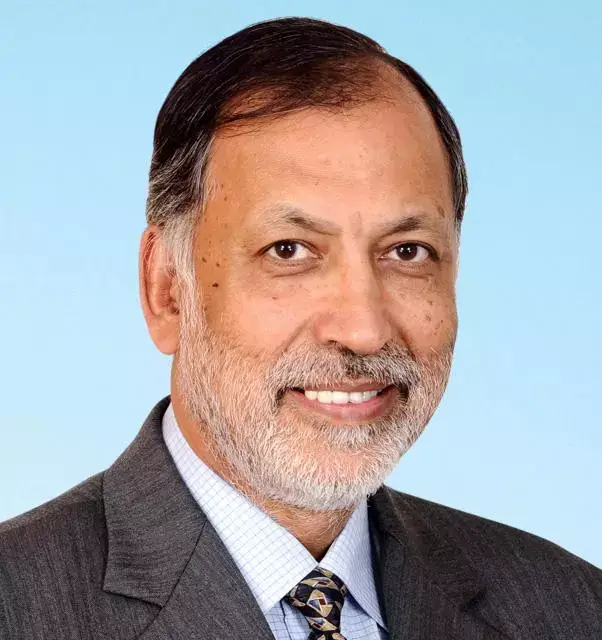
Executive Chairman
Rajendra Singh Pawar is the Executive Chairman and Co-Founder of NIIT Limited, a leading Global Talent Development Corporation, and founder of NIIT University, established with a vision of being the role model of learning, research, innovation, and sustainability for the Knowledge Society. He is also the Non-executive Chairman of NIIT Learning Systems Limited.
Under his leadership, NIIT has played a key role in shaping the growth of the Indian IT sector, by creating skilled manpower to drive its momentum. Having revolutionized the IT Training industry, he is now involved in establishing an innovative model in Higher Education, at the not-for-profit NIIT University.
Mr. Pawar is also a member of the Governing body of the not-for-profit NIIT Foundation, which addresses the skilling and livelihood needs of youth from the underserved segments of society.
Education
Mr Pawar did his early schooling in Jammu. Then moved to The Scindia School, Gwalior, and from there to IIT Delhi.
Awards & Recognitions
Mr Pawar's contributions have been widely acknowledged and he has been conferred prestigious awards:
- Acknowledging Mr. Pawar’s contribution to the IT industry in India, he was awarded the country’s prestigious civilian honor, Padma Bhushan, by the President of India in 2011.
- Distinguished Alumnus Award at IIT Delhi in 1995;
- The 'IT Man of the Year' by IT industry journal, Dataquest in 1998;
- 'Master Entrepreneur of the Year' by Ernst & Young in 1999;
- Madhav Award in 1999 at the Scindia School, Gwalior;
- Honorary Doctoral Degree by the Rajiv Gandhi Technical University in 2005;
- Maharaja Gulab Singh Award in 2006;
- Lifetime Achievement ICT Award 2019 by Dataquest;
- Lifetime Achievement Award in 2022 by the Federation of Indian Chambers of Commerce & Industry (FICCI).
Prestigious Positions
- Mr Pawar served as a member of the Prime Minister's National Council on Skill Development (2009-2014) and has also been a part of the PM's National Taskforce (1998), commissioned to develop India into an IT Superpower.
- Actively involved in India’s key Chambers of Commerce, Mr Pawar has led several ICT industry fora, including the National Association of Software & Service Companies (NASSCOM) as its Chairman in 2011-12.
- He is a Fellow of the Computer Society of India and a Distinguished Fellow of the Institution of Electronics and Telecommunications Engineers.
- Mr Pawar was the Chairman of the NASSCOM Cyber Security Task Force which was set up in response to Prime Minister Narendra Modi's vision to see India emerge as a global hub of Cyber Security products and services.
| Name of the Body Corporate | Designation |
|---|---|
| NIIT Learning Systems Limited | Non-Executive Chairman |
| NIIT University | Member, Board of Management |
| NIIT Foundation | Member, Governing Body |
| Indian School of Business | Member, Executive Board |
| Scindia School | Vice-President, Board of Governors |
| NIIT Institute of Information Technology | Member, Governing Body |
| Pace Industries Private Limited | Director |
| NIIT Education Services | Director |
| IT Infrastructure Development Corporation Private Limited | Director |
Vice Chairman & Managing Director
Vijay K. Thadani is the Co-Founder of NIIT Group and serves as Vice Chairman and Managing Director of NIIT Ltd, a leading Global Talent Development Corporation. He is also the Co-Founder of the not-for-profit NIIT University, established with a vision of being the role model of learning, research, innovation, and sustainability for the Knowledge Society.
He is also a member of the Governing body of the not-for-profit NIIT Foundation, which addresses the skilling and livelihood needs of youth from the underserved segments of society.
He also serves as the Vice Chairman and Managing Director of NIIT Learning Systems Limited.
Education
He graduated in engineering from the Indian Institute of Technology (IIT), Delhi.
Prestigious Positions
- He served as President of the Indian IT Industry Association, MAIT.
- He also served as a Chairman of the National Accreditation Board for Education and Training (NABET), under the aegis of the Quality Council of India.
- He also served as the Chairman of the Board of Governors of the Indian Institute of Information Technology (IIIT), Allahabad, Chairman of the Board of Governors of MN National Institute of Technology, Allahabad, Chairman of the All India Board of Technician Education constituted by AICTE and as a member of the Board of Governors of Indian Institute of Technology (IIT), Delhi.
- Currently, Vijay serves on the Governing Council of the All India Management Association (AIMA). He is a member of the Board of Governors of Management & Entrepreneurship and Professional Skills Council (MEPSC) and co-chairs the CII Centre for Digital Transformation.
- He also serves as an Independent Director on the Board of Triveni Turbine Limited.
Awards & Recognitions
- He has received the recognition of ‘Distinguished Alumnus” from his alma mater, the premier Indian Institute of Technology (IIT), Delhi.
- He has also received the Bank of India Award for Excellence in Management.
- He was honored with the position of ‘Economic Consultant’ to Chongqing, the world’s largest city in the People’s Republic of China.
| Name of the Body Corporate | Designation |
|---|---|
| NIIT Learning Systems Limited | Vice Chairman & Managing Director |
| Triveni Turbine Limited | Independent Director |
| NIIT Institute of Finance Banking and Insurance Training Limited | Chairman |
| RPS Consulting Private Limited | Director |
| Global Solutions Private Limited | Director |
| NIIT (USA), Inc. USA | Director |
| St. Charles Consulting Group LLC, USA | Manager (equivalent to Director) |
| NIIT Limited, U.K. | Director |
| NIIT (Ireland) Limited | Director |
| NIIT Learning Solutions (Canada) Limited | Director |
| Stackroute Learning Inc., USA | Director |
| Eagle Training, Spain S.L.U. | Director |
| NIIT Mexico, S. DE R.L. DE C.V. | Director |
| NIIT Brazil LTDA | Director |
| NIIT University | Member, Board of Management |
| NIIT Foundation | Member, Governing Body |
| NIIT Institute of Information Technology | Member, Governing Body |
| Management & Entrepreneurship and Professional Skills Council | Member, Board of Governors |
| Sadhu Vaswani Mission, New Delhi (Registered Society) | Working Chairperson |
| Sadhu Vaswani International School for Girls (part of the Sadhu Vaswani Mission) | Member, School Managing Committee |
| The Sadhu Vaswani Medical Centre (part of the Sadhu Vaswani Mission) | Member, Medical Centre Managing Committee |
| iamneo Edutech Private Limited | Chairman |
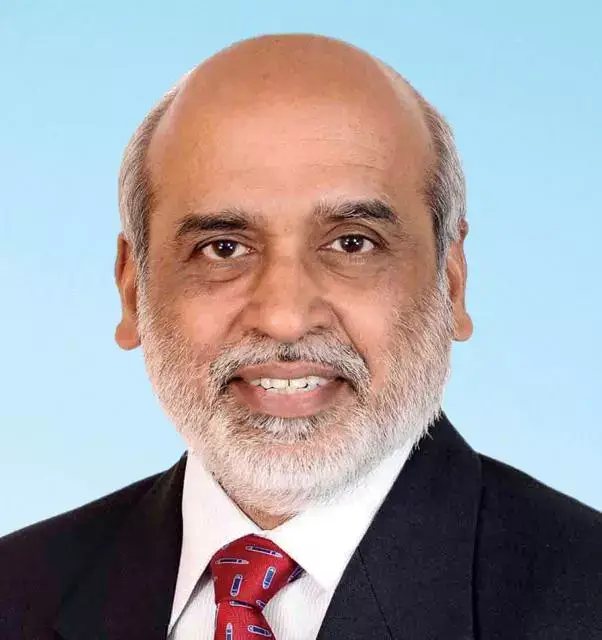
Non-Executive Non-Independent Director
Parappil Rajendran, Non-Executive Director and Co-Founder of NIIT Ltd., received degree in Electrical Engineering at the Indian Institute of Technology Delhi, India. He joined KELTRON, a Kerala government startup electronic products company, where he worked for eight years in marketing, product management, sales of electronic industrial products, and design, installation and commissioning of electronic automation and control for thermal power stations.
He serves on the Board of Management of the not-for-profit NIIT University in Neemrana, Rajasthan. As a member of the Governing Body, he is also actively engaged with the not-for-profit NIIT Foundation, which addresses the skilling and livelihood needs of youth from the underserved segments of society.
He was associated with the apex industry association, Confederation of Indian Industry (CII) for over a decade, serving on their Information Technology, Human Resources & Higher Education committees. He has served on the Central Board of Trustees of the Employees Provident Fund Organisation for eight years. He is a life member of the Institute of Electrical & Electronics Engineers, USA.
IIT-Delhi Alumni Association recognized Rajendran’s professional contributions by conferring the “Outstanding Contribution to National Development - Corporate Excellence” Award in the year 2020.
| Name of the Body Corporate | Designation |
|---|---|
| NIIT Institute of Finance Banking and Insurance Training Limited | Director |
| RPS Consulting Private Limited | Director |
| NIIT University | Member, Board of Management |
| NIIT Foundation | Member, Governing Body |
| NIIT Institute of Information Technology | Member, Governing Body |
| Pace Education and Financial Services Private Limited | Director |
| IT Infrastructure Development Corporation Private Limited | Director |
| NIIT Education Services | Director |
| NIIT Network Services Limited | Director |
| iamneo Edutech Private Limited | Non Executive Director |
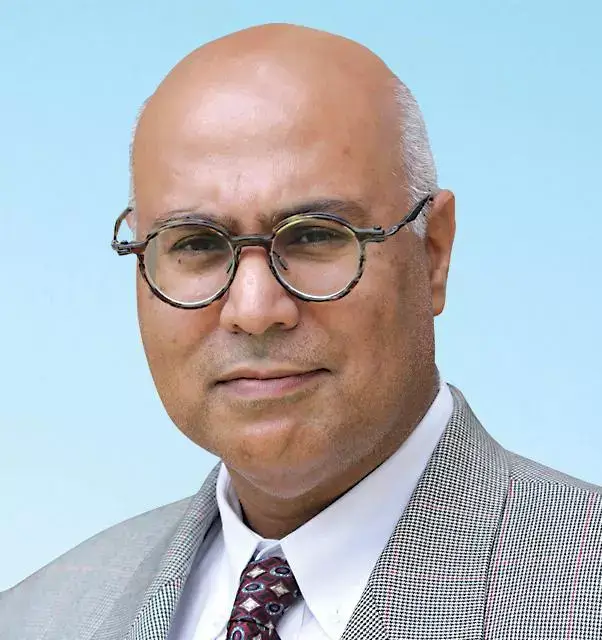
Non-Executive Non-Independent Director
Sapnesh Lalla is a non-executive Director of NIIT Ltd, a global leader in skills and talent development and a leading provider of managed training services, offering broad-based education and training solutions to corporations, institutions, and individuals in over 40 countries.
He is also the Executive Director and Chief Executive Officer of NIIT Learning Systems Limited.
Education
Sapnesh is an Electronics and Communications Engineer from Bangalore University and received his Executive Education at the Ross School of Business, University of Michigan.
Journey in NIIT
Sapnesh has served in NIIT India and the USA for over 30 years. He started his journey as a Project Lead in the Learning Content Development Team and over the years, has held various Management and Leadership roles in Product Management, Customer Support, Channel Development, Sales, and Support functions.
He has worked on several critical initiatives including NIIT’s expansion into North America & Europe and has led significant acquisitions including Cognitive Arts and Element K. He was selected to the Managing Director’s Quality Club (MDQC) in 1997 and received the coveted Global Leadership Award in 2001 and 2010. In 2010, he joined the board of NIIT(USA), Inc. in Atlanta, Georgia, USA.
He led the enterprise business of the company outside India and helped create and grow unique solutions in the areas of Learning content, learning administration & learning technologies. Among others, he led the conceptualization and growth of Managed Training Services outsourcing which is now being delivered to many global firms in the Fortune 500.
In 2017, Sapnesh was appointed CEO of NIIT Ltd. and in August 2021, he was re-designated as Executive Director and Chief Executive Officer of NIIT Limited. During this period, he took charge, learned the role, improved the business and order book, organically & inorganically, streamlined the Stackroute business in India, and led the company through the recent difficult pandemic times with determination and perseverance. Since then, he has passionately driven the digital transformation of the company and the agenda to scale up the business on the company’s new NIIT Digital platform. He became a non-executive director of NIIT Limited on May 24, 2023.
| NIIT Learning Systems Limited | Executive Director & Chief Executive Officer |
|---|---|
| NIIT Institute of Finance Banking and Insurance Training Limited | Director |
| RPS Consulting Private Limited | Director |
| NIIT China (Shanghai) Limited | Director |
| NIIT (USA) Inc, USA | Director and Chief Executive |
| NIIT Limited, UK | Director |
| St. Charles Consulting Group LLC, USA | Manager (equivalent to Director) |
| NIIT (Ireland) Limited | Director |
| NIIT Learning Solutions (Canada) Limited | Director |
| Stackroute Learning Inc., USA | Director |
| Eagle Training, Spain S.L.U. | Director |
| NIIT Mexico, S. de R.L. de C.V. | Director |
| NIIT Brazil LTDA | Director |
| iamneo Edutech Private Limited | Non Executive Director |

Independent Director
Avani Vishal Davda is a passionate business leader and has led businesses across the consumer, retail, and hospitality sectors. She has experience in business strategy in consumer and retail business of more than 19 years. Her strengths lie in developing business strategy and the ability to execute with a sharp focus on business sustainability through growth and profitability.
Education
She completed her Bachelor’s degree in Commerce with Honors (Advertising & Media) from H.R. College, University of Mumbai, and her Master’s degree in Management Studies (MMS) from NMIMS, University of Mumbai (Gold Medalist).
Career Journey
Currently, Avani is an Advisor at Bain & Company and also serves as an independent director in various large organizations across manufacturing and services such as Mahindra Logistics Limited, Persistent Systems Limited, and Emami Limited.
Her professional career took off when Avani joined the Tata Group’s coveted leadership program - Tata Administrative Service in 2002 where worked in Tata companies including TAJ Luxury Hotels, IHCL, and Tata Consumer Products Ltd.
Earlier, she was the Managing Director of Godrej Nature’s Basket Ltd- a 100% subsidiary of Godrej Industries Ltd. and before that, she was the Founder and Chief Executive Officer of Tata Starbucks Ltd., the joint venture of Starbucks Coffee Company and Tata Global Beverages Limited (TGBL).
Awards & Recognitions
- Avani was featured in “ET & Spencer Stuart Women Ahead” 2019.
- She was nominated as a Young Global Leader by the World Economic Forum, Geneva in 2014, and ranked 13 on “The Most Innovative Women in Food and Drink” list in Fortune and Food & Wine.
- She was also listed on Fortune US’s annual global list of “40 under 40 leaders” in 2013.
| Name of the Body Corporate | Designation |
|---|---|
| Mahindra Logistics Limited | Independent Director |
| Persistent Systems Ltd. | Independent Director |
| Emami Limited | Independent Director |
| MLL Express Services Private Limited | Independent Director |
| Curefoods India Private Limited | Director |

Non-Executive Non-Independent Director
Education
Udai Singh Pawar did his undergraduate studies at IIT Kanpur graduating in 2005 with an Integrated Masters in Physics.
Early career
After interning at the MIT Media Lab, in Boston, and ARRI Cinema R&D, in Munich, Udai worked at the Microsoft Research Lab in Bangalore, focusing on Technology for Education. He earned multiple US patents and published over a dozen research papers on his fieldwork in rural government schools. Microsoft USA innovated a few innovations during his tenure, and released it worldwide, as an SDK for educational software.
Journey to Filmmaking
Shifting to film-making in 2010, he started as the Chief Assistant Director to prominent filmmaker Sudhir Mishra on multiple projects, including India’s first fully digital feature film. Following this, as Associate Director on the successful war movie ‘Airlift,’. His responsibilities included planning and execution of the scheduling and logistics, and balancing the budget against creative requirements by the novel use of CGI, as well as deep logistical planning & systems that were fresh and innovative for the film industry ecosystem.
Recently, he wrote and directed the acclaimed Netflix Original film ‘Upstarts’. He researched the Bangalore start-up ecosystem, based on his personal experiences as well as research and close interactions with dozens of start-up founders. Post that, he wrote a show for JioCinema where he was nominated for a Filmfare award. He has also produced a marquee show for SonyLIV set in 1970s India.
With his passion for interdisciplinary technology and art, Udai is also involved in angel investing in some start-ups. He's also working on his future film projects, focusing on OTT platforms.
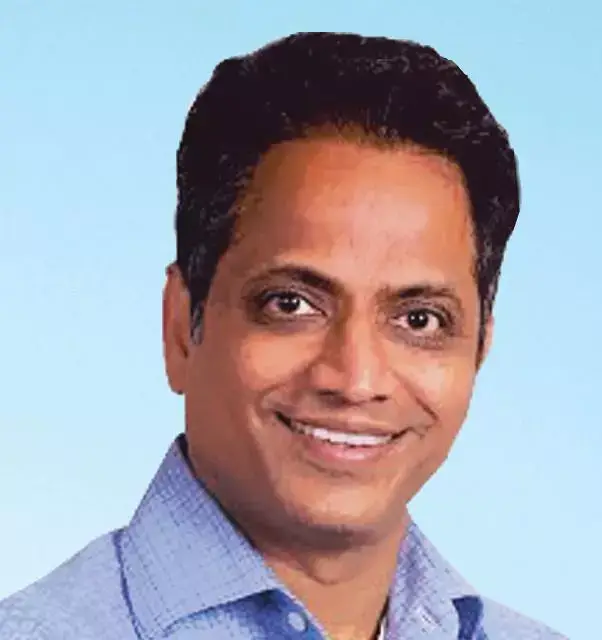
Independent Director
Ravi Garikipati is a seasoned entrepreneur with over 30 years of experience in technology and business leadership roles spanning e-commerce, deep tech, fintech, and consumer tech businesses. He is also an active angel investor, board member, and advisor.
Education
Ravi holds a Master of Science degree in Software Engineering and a Masters in Management from Birla Institute of Technology & Science, Pilani, India.
Prestigious Positions
- Ravi is the Independent Director at Axis Asset Management, guiding the team in building a digital transformation agenda for the business.
- As an Independent Director at 5Paisa Capital, he is guiding the leadership team in building a highly personalized and scalable Trading and Discount Brokerage Platform for retail investors.
- As Advisor to ICICI Lombard General Insurance, he is helping in their digital transformation across several areas including customer engagement, CRM, technology infrastructure scale-up, and user experience.
- He co-founded Davinta, a tech-driven NBFC where his focus was on digital financial inclusion at the bottom of the pyramid, specializing in the financial services industry, and providing breakthrough FinServ and FinTech solutions.
- Earlier, as Chief Technology Officer at Flipkart, he defined and executed shared technology & services vision and roadmap with a focus on cloud infrastructure, platform engineering, and overall application architecture for the company.
- He was President & CTO at 247.ai Innovation Labs, leading global product and technology groups to build one of the largest omnichannel customer acquisition & engagement platforms driven by predictive modeling hosted in the cloud.
- Ravi held various senior engineering management positions at Oracle and Covansys. He has patents in omnichannel predictive experience.
| Name of the Body Corporate | Designation |
|---|---|
| NIIT Learning Systems Limited | Independent Director |
| 5paisa Capital Limited | Independent Director |
| Axis Asset Management Company Limited | Independent Director |
| RPS Consulting Private Limited | Independent Director* |
| Davinta Finserv Private Limited (Under Liquidation) | Director |
| Trayi Venture Advisors LLP | Designated Partner |
| Trayi Venture Partners LLP | Designated Partner |
| Yamzen Consulting LLP | Individual Partner |
| Oppdoor | Senior Partner |

StackRoute, an NIIT venture, is a digital transformation partner for corporates to build deep-skilled technology and digital talent at scale. Established in August 2015, StackRoute provides disruptive IT learning solutions on programming, quality engineering, data science, and digital architecture.
Our immersive and remote programs are practitioner-led and outcome-oriented. StackRoute is geared towards imparting deep skills in digital technologies, working with multiple tier 1 IT companies, Global Captive Centers, product engineering companies, and GICs to transform their workforce and efficiently deliver digital transformation projects.Our immersive and remote programs are practitioner-led and outcome-oriented. Geared towards imparting deep skills in digital technologies, StackRoute works with multiple tier 1 IT companies, Global Captive Centers, product engineering companies, and GICs towards transforming their workforce to efficiently deliver digital transformation projects with ease.

Independent Director
Srikanth is the Co-founder & Group Chief Executive of Fractal. Fractal is an AI firm that powers decision-making for some of the world’s largest and most admired companies on the planet.
Srikanth serves as the vice-chairman of Nasscom, the apex body for the $250 billion tech industry in India. He is also a Founder & Trustee at Plaksha University, where he teaches a course on decision-making. Srikanth is also an Independent Director on the Board of Metro Brands Limited and ideaForge Technology Limited.
Srikanth believes in extreme client-centricity and taking a long-term view of business. He considers himself a lifelong student of mathematics, behavioral economics, neuroscience, and consumer behavior.
Education
Srikanth completed his B.Tech in Electrical Engineering from the Indian Institute of Technology (IIT), Delhi, and holds an MBA in Management, Finance, and Marketing degree from the Indian Institute of Management (IIM), Ahmedabad.
| Name of the Body Corporate | Designation |
|---|---|
| ideaForge Technology Limited | Independent Director |
| Metro Brands Limited | Independent Director |
| Fractal Analytics Limited | Whole-time Director |
| Theremin AI Solutions Private Limited | Director |
| Fractal Analytics Inc. (USA) | Director |
| Fractal Analytics Sweden AB | Director |
| Broadcast Audience Research Council | Independent Director |
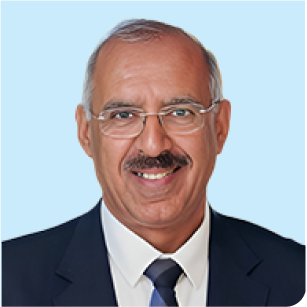
Independent Director
Sanjiv Kumar Chaudhary is an experienced finance professional. He is practicing Chartered Accountant with over 41 years of rich experience in domestic/ international tax advisory and consulting including transfer pricing & taxation of cross border transactions.
Sanjiv has worked closely with Senior legal counsel for matters in Supreme Court & High Court. He has handled corporate tax and expatriate engagements in both advisory and compliance matters, including compensation structuring, Foreign Exchange regulations, Employee Stock Option Plans and worked on both inbound expatriates and outbound assignees in respect of various Indian and overseas Companies.
Earlier, he was a Partner in the Tax and Regulatory practice of BSR & Co. LLP (Sub licensee of KPMG) for more than two decades and worked with RSM & Co. and PwC in tax practice from 2006 to 2009.
Prestigious positions
- He has served as a Board Member of the International Ethics Standard Board for Accountants (IESBA) – an independent standard-setting board that develops and issues, in the public interest, high-quality ethical standards and other pronouncements for professional accountants worldwide, for a period of 5 years from 2019 till December 2023.
- He is also an Insolvency professional from the Insolvency and Bankruptcy Board of India.
Education
He is a Law Graduate, and CPA Australia.
| Name of the Body Corporate | Designation |
|---|---|
| Affle (India) Limited | Independent Director |
| Trillionloans Fintech Private Limited | Independent Director |

Independent Director
Ms. Sonu Bhasin is a distinguished and long-tenured professional within the industry. Throughout her career spanning over three decades, she has successfully established and led substantial businesses and diverse teams across both financial and non-financial sectors in India and internationally.
Sonu led various businesses in senior leadership positions during her corporate career. She began as a TAS (Tata Administrative Service) Officer with the Tata Group and spent 13 years with the Group before becoming a Banker.
As a Banker, she held a few prestigious positions like Director at ING Barings, President at Axis Bank and Group President at Yes Bank. Later, she moved to the leadership team of Tata Capital Limited as Chief Operating Officer.
Currently, she is serving as Director on Boards of well-known and reputed domestic and multinational companies like Sutlej Textiles and Industries Limited, Berger Paints India Limited, Triveni Turbines Limited, Multicommodity Exchange of India Limited, Max Life Pension Fund Management Limited and Travel Food Services Limited.
She is working in the area of Family Businesses and is the Founder of FAB – Families And Business LLP. Sonu has worked extensively with both the patriarchs and the inheritors of family businesses and has enabled them to focus on building multi-generational businesses. As a Business Author, she has published five books on families and entrepreneurs behind top successful brands in India which are best sellers.
She is also a columnist with The Economic Times, the leading financial daily of India. And her YouTube channel features insightful conversations with a diverse range of accomplished individuals, including family business owners.
Awards and recognitions
- She was named as one of the Global 100 Most Influential individuals for family enterprises in 2020 and inducted into the FBU Family Business Hall of Fame in 2022.
- Sonu won the prestigious Gaja Capital Business Book Prize, in 2024 and she’s the first woman author to have won the Award.
Education
Sonu Bhasin received her B.Sc (Hons) in Mathematics from St. Stephen’s College, Delhi University, and her MBA from the Faculty of Management Studies, Delhi University.
| Name of the Body Corporate | Designation |
|---|---|
| Sutlej Textiles And Industries Limited | Independent Director |
| Berger Paints India Limited | Independent Director |
| Multi Commodity Exchange of India Limited | Independent Director |
| Triveni Turbines Limited | Independent Director |
| Travel Food Services Limited | Director |
| Max Life Pension Fund Management Limited | Director |
| Mahindra First Choice Wheels Limited | Director |
| FAB – Families And Business LLP | Partner |
Chief Executive Officer
Pankaj Jathar brings over 25 years of experience in leading global corporations through transformational change. Before joining NIIT, he served as the Country Head, of India at Etsy, where he successfully set up and grew the platform, building a robust two-sided marketplace connecting millions of buyers and sellers. Before Etsy, Pankaj was the CEO of Prione, a joint venture between Amazon and Catamaran Ventures, where he steered the organization’s vision and achieved ambitious goals. He also played a pivotal role in launching and scaling Amazon in India, delivering exceptional results through strategic vendor management, deep market insights, and effective category management.
Pankaj has spent a total of 13 years in the digital economy and has had a ringside view of how this has scaled and how the Indian consumer has changed through this journey.
Before this, he was with Accenture for over five years where he helped BFSI companies across the US & UK figure out how to be more efficient through outsourcing.
Recognized for his ability to identify and nurture high-caliber talent, Pankaj creates visionary strategies and leverages technology and innovation to solve complex business problems. Additionally, Pankaj advises startups, helping them navigate the early e-commerce journey, and has coached numerous leaders.
His extensive background in consumer-focused businesses and technology-driven industries positions him well to drive innovation and growth at NIIT.
Education and initial years of career
Post his MBA from IIM, Calcutta, Pankaj began his career as a Senior Management Trainee at NIIT. He worked with R S Pawar the founder & Chairman. During his first stint here, he was closely involved with the Hole-in-the-Wall Education Project (HiWEP), working with Dr. Sugata Mitra. Established in 1999, HiWEP introduced "Minimally Invasive Education," transforming elementary education and life skills for disadvantaged communities worldwide. The NIIT Foundation continues to scale this initiative, benefiting children in rural and urban slum areas globally.
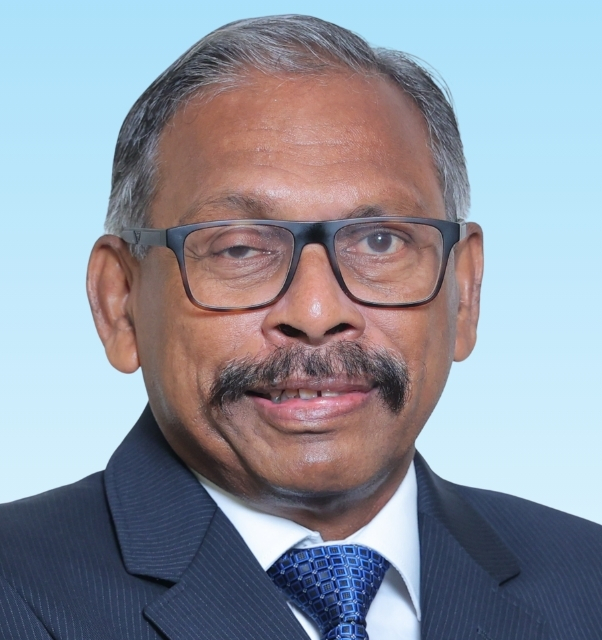
President, Growth Initiatives
Pradeep Narayanan is the President of Growth Initiatives at NIIT Limited. A postgraduate in management from XLRI, Jamshedpur, Pradeep brings more than 40 years of extensive experience across companies like Oil and Natural Gas Corporation, Eicher GoodEarth Ltd, 24/7 – Inc., Admizzionz Campuz, and MindChampion Learning Systems Limited.
He is considered a pioneer in franchising the education business and one of the most respected figures in the retail IT education sector. Pradeep has held many key management positions at NIIT and was a key member of the leadership team that steered the company successfully during his first tenure from November 1987 to June 2004.
In his first stint at NIIT, Pradeep headed the retail education business in India. He was responsible for scaling NIIT’s IT education business by setting up and managing over 1,500 education centres worldwide, delivering education to over half a million students at any point in time. This involved incorporating local companies, hiring people, establishing local partnerships, designing and implementing products and marketing & sales plans, and owning the P&L of the business.
After his first tenure, Pradeep went on to become Chief Delivery Officer of 24/7 – Inc., headquartered in Bangalore, one of India’s leading knowledge process outsourcing firms. He later rejoined NIIT in June 2018 initially as President of NIIT Digital, and has since transitioned to focus on Growth Initiatives, driving innovative skilling solutions, organisational expansion and new-age talent development programs.
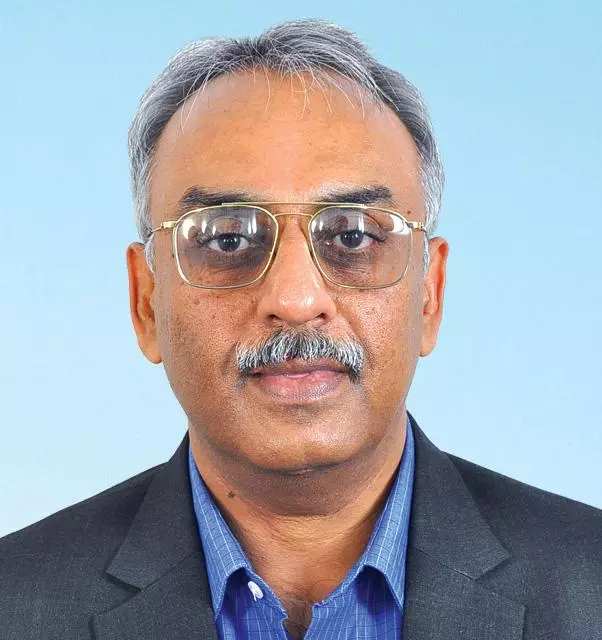
President, Generative AI
Udai is the President of Generative AI at NIIT Limited. During his tenure at NIIT, spanning 4 decades, Udai has led the design & implementation of numerous technology-enabled learning innovations and set up new businesses to take these ideas to market. He helped set up NetVarsity.com, one of the world’s earliest online learning portals in 1996, became its CTO in 2000, and ran NIIT Online Learning Limited till 2003 as its COO. This evolved into a Brick-and-Portal model of Blended Education delivery that was unique to NIIT. In 2006, he helped set up NIIT Imperia and brought Executive Management Education from Premier institutes such as IIM Ahmedabad and IIM Calcutta to working professionals across India through a unique Synchronous Learning Technology platform. He was an early proponent of the use of Cloud platforms and technologies and conceptualized & deployed India’s first Cloud CampusTM featuring NIIT’s unique Cloud & Collaborative Learning Model in 2011. Under his leadership, StackRoute was set up in 2015 to offer a fully immersive experience to learners and transform them into the world’s best Fullstack developers.
In his previous role as President of the Corporate Learning Business in India, his focus was on executing NIIT’s strategy to create a multi-modal learning delivery capability in India. He led NIIT’s key strategic initiatives including incubating StackRoute, the acquisition of Perceptron Learning Solutions, and the integration of their unique next-generation mastery learning platform. He set up StackRoute Labs to nurture the relationship with EkStep Foundation which has pioneered some of India’s largest digital platform initiatives in the area of School education & Teacher training. Udai was a part of the NASSCOM Future Skills Taskforce that came out with a comprehensive strategy to support & accelerate Digital Transformation initiatives across the IT/ITeS Sector through future-focused upskilling & re-skilling on digital skills. He has been a member of the Governing Council of the Confederation of Indian Industry (CII) Center for Digital Transformation since 2019, focusing on Skill Building initiatives.
Education and Initial years of career
Udai did his B.E. in Electrical & Electronics Engineering and M.E. in Electronics & Control from BITS, Pilani. Became the youngest Lecturer at the age of 21 and taught Computer Science courses for a year before joining NIIT in 1990.
President, NIIT China
Kamal Dhuper is the President of NIIT China, a subsidiary of NIIT Limited. NIIT offers multi-disciplinary learning management and training delivery solutions to corporations, institutions, and individuals in over 30 countries.
Kamal has served NIIT in India and China for over 30 years. He began his journey at NIIT Dehradun from 1992 to 1995, after which he moved to NIIT in Delhi. During his time in Delhi from 1995 to 2002, Kamal performed multiple roles in direct marketing, channel management, sales, and marketing coordination, as well as own center profitability management at regional and national levels. These responsibilities were part of India's Individual Learning Solutions business.
Between 2003 and 2005, Kamal served in the corporate office as a Senior Business Manager, working closely with Co-founder, Vijay Thadani. In this role, Kamal was responsible for coordinating strategy planning, budgeting, and business reviews with Independent Business Units (IBUs). He also provided support to NIIT China's business from India during this time.
In July 2005, Kamal relocated to Shanghai, China, with his family and took on the position of Regional Manager for the East, Central, and South China regions. In 2006, he was given the overall responsibility for operations of NIIT China, including sales, marketing, business development, and delivery operations. Since 2016, Kamal has been independently handling NIIT China's business.
In China, NIIT works closely with provincial governments, software parks, universities, colleges, business partners, and technology companies to provide NIIT Digital programs. NIIT China has established and cultivated global talent development cooperation with multiple cities and provinces of China, collaborating with governments and universities in public-private partnership models. Currently, NIIT successfully operates in several provinces of China, including Shandong, Guizhou, Hainan, Ningxia, Guangxi, Jiangsu, Henan, and Sichuan.
Education
Kamal holds an MBA and has completed executive education programs on Organization Design for Digital Transformation from MIT Sloan School of Management and a Postgraduate Diploma in Digital Business from Columbia Business School.
Prestigious Positions
- Kamal has also been involved with the Confederation of Indian Industry (CII) in China.
- He served as the Chairman of the IT Taskforce of the CII-India Business Forum from 2015 to 2017, where he worked on creating opportunities for the Indian IT industry in Guizhou and Jiangsu provinces. Between 2017 and 2019, he was appointed as the Chairman of the CII-India Business Forum.
- In recognition of his contributions, Kamal was appointed as a member of the International Advisory & Consultative Committee by the Wuxi municipal government in 2012.
- During his tenure at NIIT in India and China, Kamal was part of the "Pathfinder's Squadron" and "Chairman's Quality Club."
- He is also a member of the board of multiple overseas subsidiaries of NIIT.
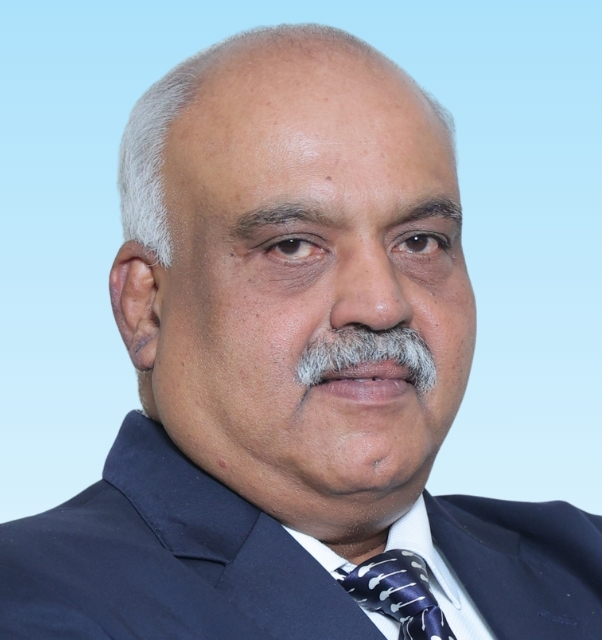
Chief Executive Officer, RPS Consulting
Prasad Balakrishnan is the Chief Executive Officer of RPS Consulting, a subsidiary of NIIT Limited. He is a proven business leader with over 30 years of experience in the IT industry. He has a diverse background ranging from technology to talent management and has demonstrated his ability to develop new business initiatives and partnerships.
With a strong track record of continuous growth in highly competitive markets, Prasad has held various strategic positions, handling different disciplines and business functions. He possesses a deep understanding of the industry and has successfully managed P&L responsibilities in rapidly evolving technology sectors.
Education
Prasad Balakrishnan holds a BE in Electronics.
Early career and journey till NIIT
He began his career with RCS Technologies, where he managed the business operations and led the organization to become a preferred partner for numerous blue-chip companies and government clients. He is known for his expertise in people management, effectively aligning and rallying cross-functional teams toward achieving business objectives and success.
Passionate about numbers and market leadership, Prasad has a proven talent for creating a vision for growth. As a founding director of RPS Consulting Private Limited, an enterprise IT education and competency-building organization, he has been instrumental in driving the company towards positive results and organic growth year after year.
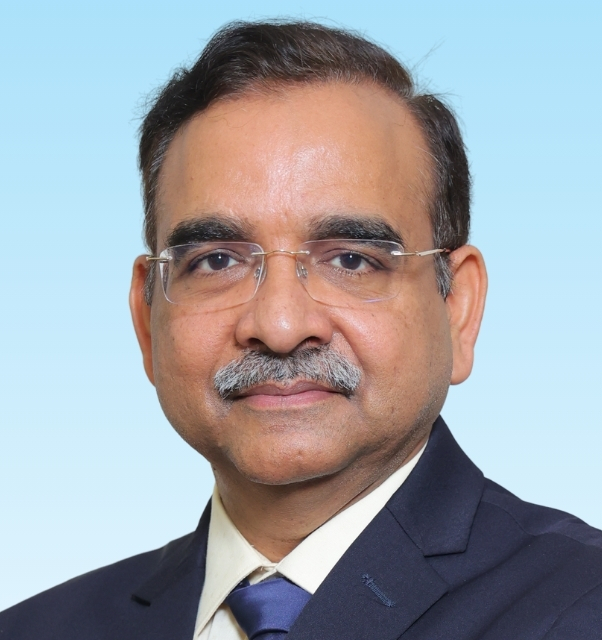
Chief Financial Officer
Sanjeev Bansal is the Chief Financial Officer at NIIT Limited. Sanjeev has been associated with NIIT since 2005, during this period he has played a key role in providing strategic direction to the Finance function. Sanjeev joined NIIT as Senior Manager (Accounts) and steadily advanced to his current position.
His areas of expertise encompass finance strategy, financial reporting, governance, business modeling, structuring/ restructuring, merger and demerger, process design/ implementation/ automation, global accounting operations, financial planning/analysis, and implementation of major regulatory reforms. Sanjeev has cultivated diverse exposure and strong relationships with multiple professional entities, accounting/ tax advisory firms, as well as regulatory bodies.
Sanjeev has over two decades of experience at the helm of financial services at various enterprises. Before joining NIIT, Sanjeev gained valuable experience working with prominent companies such as Electrolux, Radico Khaitan, and JK Group, where he was responsible for planning, reporting, governance, risk management, accounting, and inorganic growth initiatives.
Education
Sanjeev is qualified as a Chartered Accountant from the Institute of Chartered Accountants of India.
Awards
The esteemed "NGLP" and "Trailblazers" series of awards, which acknowledge his exceptional contributions in driving quality, speed, and innovation within the organization.
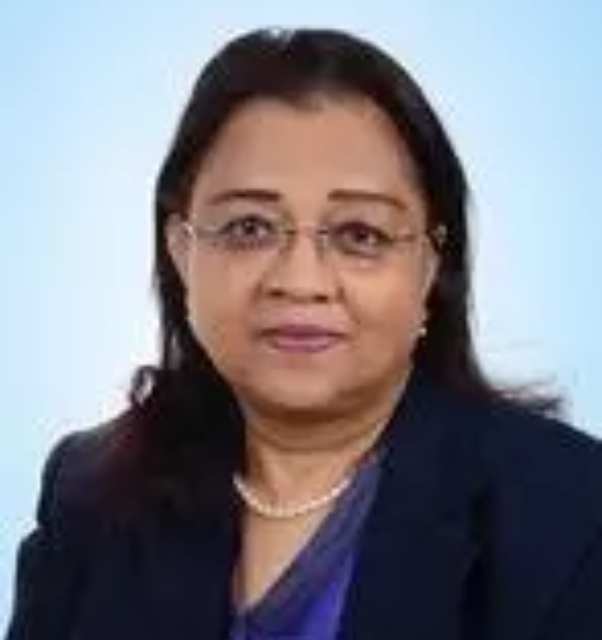
HR Head
Dr. Mita Brahma is the HR Head, of NIIT Limited and has experience of more than 30 years spans the consulting, software, banking, and education sectors.
Mita has worked in different areas of retail, corporate, and institutional banking with the State Bank of India. She has headed the Human Resource function at Nucleus Software Exports Ltd and led large organizational development initiatives with Grow Talent, a consulting services organization. Some of the areas in which she has led projects are real-time strategic change, leadership assessment & development, goal alignment and deployment, organization design, and workplace technologies.
As a senior member of the NIIT leadership team, Mita is responsible for designing and executing the people strategy. Her focus areas are talent development, and maintaining organizational agility and resilience, in the current era of digital disruption. She is also an active contributor as a thought leader in the areas of Future of work, Inclusion, and Entrepreneurship.
Mita has research interests and has published in peer-reviewed journals and Springer publications.
Education
Mita completed her Integrated M.S. in Applied Physics and MBA from the Indian Institute of Technology, Delhi, and obtained a Fellowship from the Management Development Institute, Gurgaon.
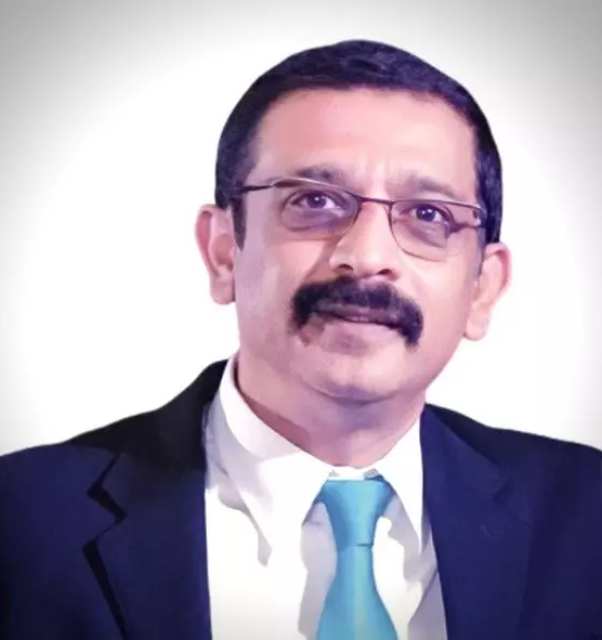
Chief Digital Officer
Rajan Venkataraman is the Chief Digital Officer at NIIT and is responsible for driving digital strategy and transformation for the organization.
As Chief Digital Officer, Rajan heads the Learning Science & Technology group at NIIT with a clear charter to build and leverage digital solutions to scale and grow a digitally driven business. He leads the development of innovative platforms that elevate business outcomes and customer experience.
Education and Journey with NIIT
He has had a long and successful tenure at NIIT. He began his journey as a post-graduate student at NIIT Chennai in 1988. Since then, he has been instrumental in achieving the many milestones in NIIT’s growth. From establishing the technology and platforms for the global business in the US in 1996 to the design and implementation of NIIT’s innovative Computer drome facility that provided 24x7 computer labs in major cities in India as Chief Technology Officer.
He has spearheaded many cutting-edge technology initiatives like an award-winning sales enablement platform, a customer experience platform, and AI-driven solutions that have all ushered in an EdTech revolution at NIIT. He also led several digital transformation initiatives that enabled customers and NIITians to work remotely during the pandemic. NIIT has been awarded multiple Information Security and Global Compliance certifications under his leadership.
Awards
He has received the Global Leadership Award for his significant contributions globally.
Interests
Rajan is a Formula 1 fan and enjoys cooking.

NIIT Digital is a Learner Experience Platform that has been playing an integral role in connecting corporate and individual learners seamlessly. It has successfully enabled an environment for improving learning, effectiveness, and efficiency through live interactive learning and mentoring sessions. To provide deep learning, NIIT Digital not only provides new-age, online, instructor-led tech programmes, but also includes placement assurance to truly transform the learners' lives. Delivered in an interactive format, the platform assists in bridging the gap between the needs of the tech industry and the job readiness of learners.

To specifically address the skilled manpower requirement of Banks and Financial Services (BFSI) in India, NIIT set up NIIT Institute of Finance, Banking and Insurance (NIIT IFBI) in 2006.
Over the last 16 years, NIIT IFBI has been a preferred training partner for BFSI Organizations and has trained over 2,50,000 BFSI professionals. Leading Indian Banks and Financial services companies have partnered with NIIT for building high quality workforce across the organization.

RPS Consulting is an enterprise learning services company helping over 250+ Global Captive Centers (GCC’s) and Global System Integrators (GSI) with various IT Skills ranging from Cloud (Infrastructure Modernization, Application Modernization, Data Platforms), IT & Cyber Security, Modern Workspace, Bizz Apps, No Code–Low Code/Automation etc. Based out of Bengaluru, RPS Consulting has been assisting its clientele to plan and seamlessly execute their employee training initiatives for the past 15+ years.
RPS has strategic partnerships with 30 OEMs such as Microsoft, AWS, VMware, Google, Red Hat, (ISC)2, Citrix, Veema, EC- Council & others. Trained 76,000+ associates on various technologies during FY21-22 through instructor-led training. Has a large in-house trainer pool and technology consultants.

Sales and Customer Service capability building are critical to the long-term success of any organization. NIIT has deep expertise in empowering businesses in creating an eco-system for talent development that empowers individuals to enhance key competencies & elevate performance to achieve higher business outcomes.
Leading enterprises have partnered with NIIT towards their talent-building initiatives designed to help their workforce, across sales and service roles, acquire contemporary customer-facing skills, demonstrate higher productivity, and deliver growth. NIIT’s proven talent development methodologies are industry agnostic and are designed to build highly skilled talent focused on delivering business outcomes.

Chief Human Resources Officer
Shilpa Dua is the Chief Human Resources Officer (CHRO). In this role, Shilpa will lead NIIT’s people strategy, shaping its talent agenda, leadership development and organizational culture to enable the company’s next phase of growth and transformation.
Shilpa brings multi-industry experience across FMCG, financial services, retail, and technology, with a strong track record of building high-performing teams, leading large-scale transformations, and shaping people strategies that drive business outcomes.
Before joining NIIT, Shilpa was Head – HR for the Axis Partnership at Max Life Insurance, where she led a people strategy turnaround, significantly improving engagement, retention, and business performance. She has also held senior leadership roles at Walmart India, Hindustan Coca-Cola Beverages, and GlaxoSmithKline Consumer Healthcare, where she partnered with business leaders on organization design, talent strategy, and leadership capability building. her advisory experience includes business expansion, building organizational capability for scaling up for startups in the technology sector.
She holds an MBA in Human Resources from FORE School of Management and a Bachelor’s degree in English (Honours) from Delhi University.
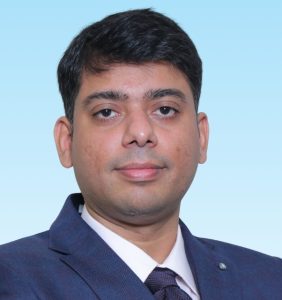
Business Head, NIIT Digital and Head of Marketing
Anshumaan Prasad serves in a dual capacity as the Business Head of NIIT Digital and the Head of Marketing for NIIT Limited. With over 15 years of experience across the FMCG, FMCD, and technology sectors, he leads NIIT Digital’s growth strategy while strengthening the organization's overall brand presence.
He brings a diverse professional background, having honed his expertise at organizations such as Hindustan Unilever Limited (HUL) and Amazon. Throughout his career, he has consistently demonstrated the ability to navigate businesses through complex growth stages, manage resource constraints, and drive the success of market-leading brands.
Prior to joining NIIT, Anshumaan was with Amazon India, where he led mass-marketing initiatives for Amazon Prime and Amazon Specials. His leadership in these roles contributed to significant business growth over a three-year period. His track record of executing successful marketing campaigns and leading high-performing teams makes him a core member of NIIT’s leadership.
Anshumaan holds a dual degree from IIT Kharagpur and an MBA from IIM Bangalore.

Company Secretary & Compliance Officer
Arpita Bisaria Malhotra serves as the Company Secretary & Compliance Officer at NIIT Limited and has been associated with the organization since 2016.
Arpita is a dynamic and accomplished professional with a career spanning nearly two decades of experience across the secretarial, compliance, and corporate governance domains. Her expertise encompasses complex corporate restructuring, strategic mergers and acquisitions. Prior to her tenure at NIIT, she held key positions at several prestigious organizations, where she cultivated a rich and diverse portfolio in end-to-end compliance management.
Education
Arpita is a Fellow Member (FCS) of the Institute of Company Secretaries of India (ICSI). Her academic foundation is further strengthened by a degree in Law (LLB) and advanced specialization in Business Law (MBL).
Awards
During her career at NIIT, she has been recognized with several prestigious awards, including the "Young Achiever Award" in 2016, “Unstoppable Award” in 2018 and “Award of Excellence” in 2024.

Senior Vice President & Business Head – Enterprise IT Business, StackRoute
Dr. Vishnupriya Raghavan is a visionary leader in corporate education, research, and consulting, with a proven record of transforming both established and early-stage businesses into sustainable and profitable units. She is recognized for establishing thought leadership and driving business-aligned talent capabilities that enable enterprises to stay future-ready.
Her career spans building and scaling new business lines, productizing services for differentiation and repeat business, and forging long-term client relationships through innovative solutions and strategic excellence. With extensive expertise in enterprise IT, product management, business analysis, data science, cybersecurity, and related domains, she has successfully led high-performance teams and instilled a culture of continuous innovation and excellence.
Dr. Raghavan has also made significant contributions to academia and research. She has authored over 15 “A” journal publications on cutting-edge topics including Artificial Intelligence, Generative AI, Blockchain, Cloud Computing, Digital Transformation, User Experience, E-commerce, E-Governance, Supply Chain Management, and Industry 4.0. This strong research foundation complements her corporate leadership, enabling her to align organizational talent capabilities with evolving business needs.
Through her ability to combine academic rigor with practical business insight, Dr. Raghavan has consistently delivered stakeholder value, built global collaborations, and guided enterprises in developing capabilities that drive sustainable growth and digital transformation
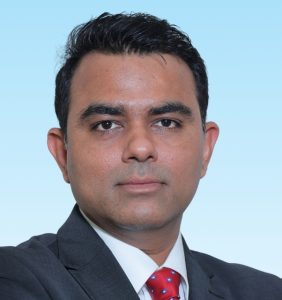
Executive Vice President and Business Head
Gaurav Nigam is the Executive Vice President and Business Head at NIIT Limited, currently leading the BFSI and SSE businesses. His mandate focuses on strengthening NIIT’s position as a strategic skilling partner for India’s financial services ecosystem and emerging digital enterprises.
Gaurav brings over two decades of experience across banking, insurance, and education technology, with a strong track record of building high-performing businesses and driving large-scale transformation initiatives. Before taking on his current role, he successfully led NIIT’s BFSI training business, shaping outcome-led talent development solutions for leading banks and financial institutions.
Gaurav holds a Bachelor’s degree in Computer Science Engineering from Government Engineering College, Bhopal, and an MBA in Marketing from SVKM’s Narsee Monjee Institute of Management Studies (NMIMS), Mumbai.
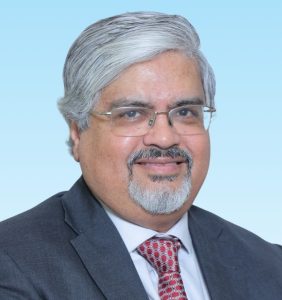
Executive Vice President, Head-New Technologies
Dr. Yogesh K. Bhatt serves as Executive Vice President and Head – New Technologies Design at NIIT. In this role, he is responsible for shaping NIIT’s strategy, offerings, and frameworks across emerging and next-generation technologies, with a strong focus on designing innovative, future-ready solutions for enterprises and learners. He plays a pivotal role in conceptualising and building technology-led learning architectures that address evolving industry needs across IT, digital, data, and advanced technology domains.
Yogesh is an accomplished leader and a veteran in the corporate education and training ecosystem, with over 26 years of experience spanning training, education, research, and consulting. He has worked extensively on creating and delivering transformative talent solutions across levels, leveraging an integrated mix of learning, development, and assessment interventions. He has led multiple education and training product launches across IT, Data Science, and Management categories in both B2B and B2C segments
Prior to his current role, Yogesh held senior leadership positions at Manipal Global Education, where he served as Vice President – Education and Training, Manipal ProLearn, and earlier at Infosys as Associate Vice President – Education and Research. Under his leadership, Manipal ProLearn received several prestigious recognitions, including Best Corporate Training Program at the India Education Awards 2019, the Golden Peacock National Training Award in 2018, and the Outstanding Partner Award for Innovative Solution from IBM in 2016. He was also conferred the Great Manager Award in 2016 by People Business and The Times of India in the category of Individual Credibility.
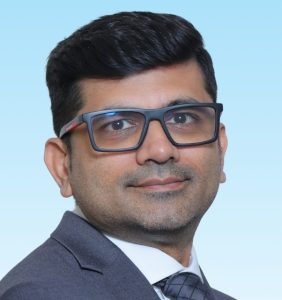
Founder, iamneo.ai
Senthilkumar TP brings over 18 years of experience to the EdTech ecosystem, specializing in technology-led solutions that bridge the gap between academia and industry. A seasoned leader with a blend of corporate rigor and entrepreneurial vision, he has consistently focused on creating scalable, outcome-driven platforms that redefine how technical skills are acquired.
Before founding iamneo.ai, Senthilkumar spent years at Siemens, leading complex, large-scale enterprise initiatives. While successful in the corporate world, his passion for skill development eventually led him to pivot toward entrepreneurship. His mission was clear: to transform the way technology is taught and assessed at scale.
Senthilkumar founded iamneo.ai on the principle that technology should empower educators, not replace them. Under his leadership, the company has pioneered AI-driven platforms that automate the heavy lifting of evaluation and learner monitoring. By removing these manual bottlenecks, he enables educators to return to their core purpose: mentoring and inspiring the next generation of talent.
Today, Senthilkumar is focused on the next frontier of EdTech, integrating Generative AI to fundamentally change how students learn to code. Rather than just automating tasks, his product vision uses AI to provide personalized, real-time feedback and simulate real-world industry environments. By aligning academic learning with the rapid pace of the AI-powered workforce, he is ensuring that learners don't just study technology, they master it for the long term.
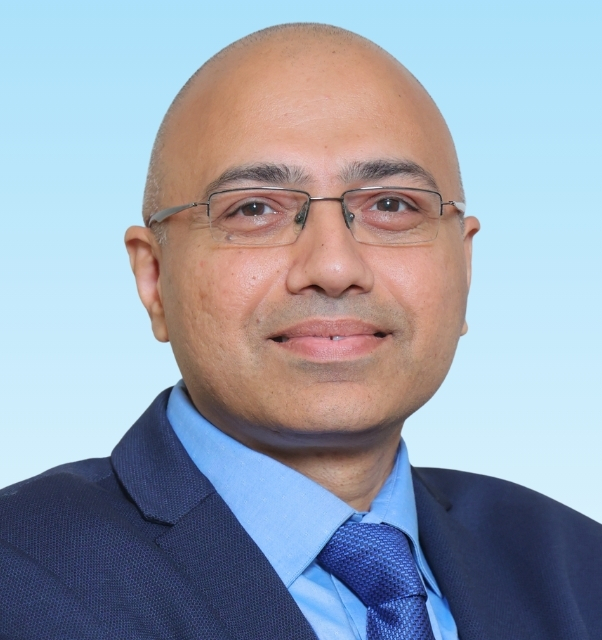
Head of Technology, NIIT Digital
Harsh Kundra is the Head of Technology for NIIT Digital at NIIT Limited, leading technology strategy and spearheading the next phase of digital transformation across the organisation. With over a decade of leadership experience in product engineering, digital transformation, and enterprise architecture, he drives scalable technology platforms to support NIIT’s outcome-led skilling models.
Prior to joining NIIT, Harsh served as Chief Technology Officer at LEAD School, where he played a pivotal role in scaling its ed-tech infrastructure nationwide. His entrepreneurial journey includes co-founding and leading technology at two ventures—Tolexo Online and a B2B retail eCommerce platform. He has also held technology leadership positions at Jabong, Meritnation, and Hindustan Times, contributing to digital transformation initiatives across e-commerce, education, media, and SaaS sectors.
A strategic thinker and hands-on technologist, Harsh is passionate about leveraging cutting-edge technologies to build solutions that create lasting business impact. His expertise in consumer and enterprise segments aligns with NIIT’s mission to evolve digital learning capabilities for the future of work.
Harsh holds a master’s degree in Human-Computer Interaction from Carnegie Mellon University’s School of Computer Science.
Book your visit


HFF = 216.73.216.60, 18.68.21.14
S = 10.50.4.10
R = 10.50.1.50