

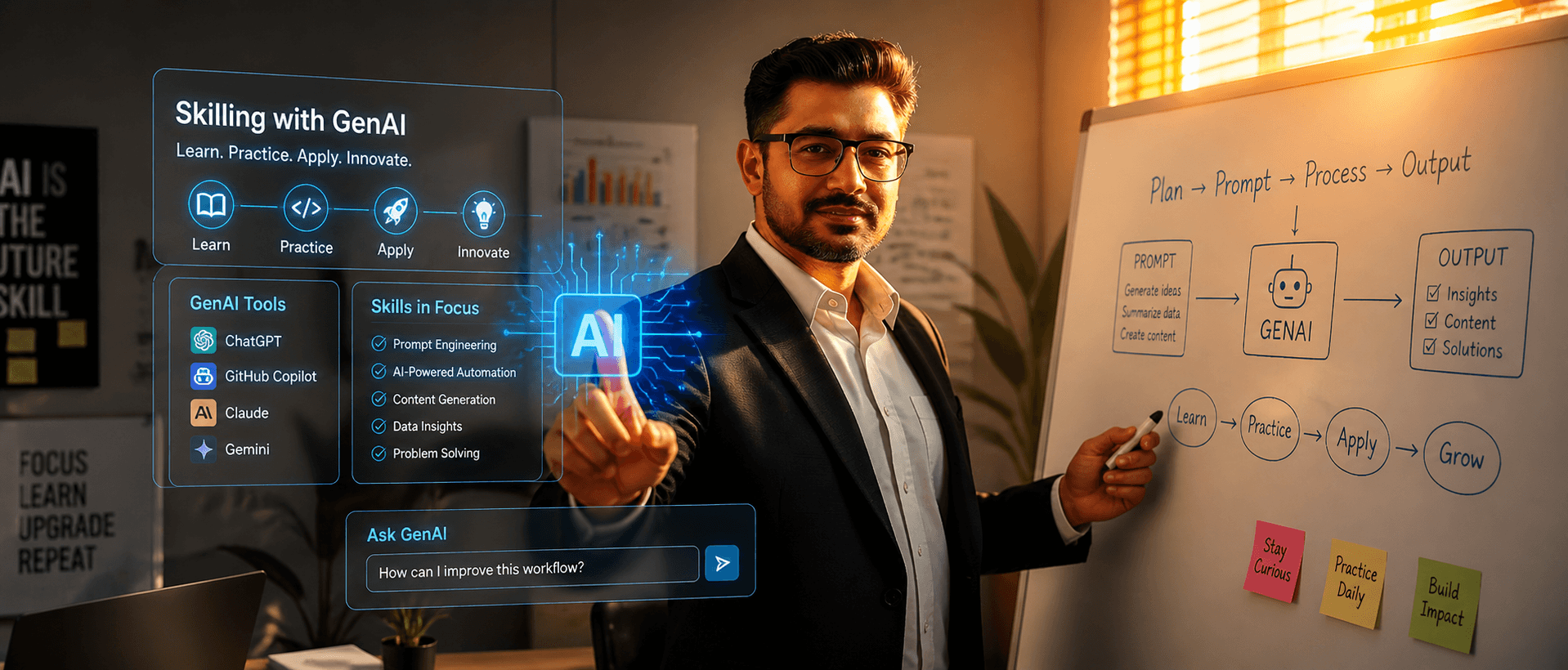



Top Programming Languages to Learn in 2025
You want a job-ready portfolio piece, not another tutorial file. An 8-week project forces focus: one user, one problem, one deploy. The right language is the one that gets that single project designed, coded, and shipped without stalls. This guide maps the most practical choices in 2025 to specific first projects so you can move from “learning” to “launching” with zero ambiguity.
1) The rule that removes confusion
Define the project first, then pick the language that reduces unknowns and shortens build time.
- If the project runs in a browser or as a mobile UI, the shortest path is JavaScript (with TypeScript as you grow).
- If the project needs data cleaning, analysis, or automation, the shortest path is Python.
- If the project must be reliable at scale or Android-friendly, the shortest path is Java.
- If the project needs speed, memory safety, or command-line tooling, the shortest path (with a learning curve) is Rust.
2) Python: data analysis, automation, and glue
Choose Python when your first project processes files, scrapes pages, cleans CSVs, or turns notebooks into simple dashboards.
- Typical 8-week project: a data-to-decisions pipeline that ingests CSV/Excel, cleans data, and publishes a small report or API.
- Core tools you will use immediately: pandas for python programming data analysis, requests/httpx for fetching, FastAPI or Flask for a tiny API, and Jupyter for quick iterations.
- What you’ll ship: a Git repo with scripts, a FastAPI endpoint that returns metrics, and a one-page dashboard hosted on Render/Vercel.
- Why Python first: readable syntax, huge library support, and fast turnaround from idea to result.
3) JavaScript: web interfaces and rapid product loops
Choose JavaScript when your first project lives on the web and must feel fast on budget Android phones and average laptops.
- Typical 8-week project: a course finder or task board with auth, forms, and a real API.
- Core tools you will use immediately: React + Router for pages, fetch/axios for API calls, and simple state management with hooks; add TypeScript once you’re stable.
- What you’ll ship: a responsive SPA, a few accessible components, and a deployed site with environment-based API keys.
- Why JavaScript first: one language for UI and (optionally) server via Node.js, plus instant feedback as you iterate.
4) Java: reliability, Android, and enterprise pathways
Choose Java when your first project must be predictable under load, or when Android is on your roadmap.
- Typical 8-week project: a secure enrollment API with roles, validation, and a PostgreSQL database; or a small Android app using modern tooling.
- Core tools you will use immediately: Spring Boot for REST, JPA for data, JUnit for tests; on Android, Kotlin is common, but Java fundamentals transfer cleanly.
- What you’ll ship: a documented REST service with auth, database migrations, and CI tests; or a Play-Store-ready MVP.
- Why Java first: strict typing, mature frameworks, and strong hiring demand in product and services firms; if you need structure and mentorship, a java programming language course accelerates setup and review.
5) Rust: performance, safety, and systems discipline
Choose Rust when your first project needs native speed, safe concurrency, or a single static binary you can distribute anywhere.
- Typical 8-week project: a CLI tool that transforms logs to analytics, or a small backend with Actix/Axum serving a high-throughput endpoint.
- Core tools you will use immediately: Cargo for builds, serde for JSON, tokio for async, and sqlx for DB access.
- What you’ll ship: a compiled binary, a performance benchmark, and a minimal service with precise error handling.
- Why Rust first (if the fit is right): memory safety without a garbage collector, small footprints, and skills that transfer to embedded and backend performance work.
6) How to pick today and start this week
Lock the project, set the milestones, and align the language with the deliverables.
- Week 0: write a one-page spec—user, problem, inputs, outputs, and a demo scenario; choose Python, JavaScript, Java, or Rust based on the spec.
- Weeks 1–2: scaffold the repo, implement the core flow end-to-end with fake data, and deploy a “hello-project” version.
- Weeks 3–6: replace fakes with real data, add auth, handle errors, and write tests you can run in CI.
- Weeks 7–8: measure speed, fix bugs, write README/docs, and record a 2-minute demo video.
- Course tip: if the chosen path is front-end heavy, pair it with a module that teaches accessibility and deployment; if the path is data-heavy, prioritise python programming data analysis skills; if reliability is key, consider a mentored java programming language course.
Conclusion: Choose the language that ships your first proof
The top programming languages to learn in 2025 are the ones that ship your first proof in eight weeks: Python for analysis and automation, JavaScript for web interfaces, Java for reliable services and Android, and Rust for safe, fast tooling. When you tie the language to a single, shippable project, you learn exactly what matters and ignore what doesn’t. If you want structure, NIIT Digital can mentor you from spec to deploy so your choice of Python, JavaScript, Java, or Rust turns into a portfolio project—fast, focused, and real.
Unifying idea: Pick the language that ships your first real project in 8 weeks; let the project define the stack, not the trend.
Tagged In
NIIT Author
Expert Contributor
Industry expert contributing to NIIT's knowledge base on technology and education.