


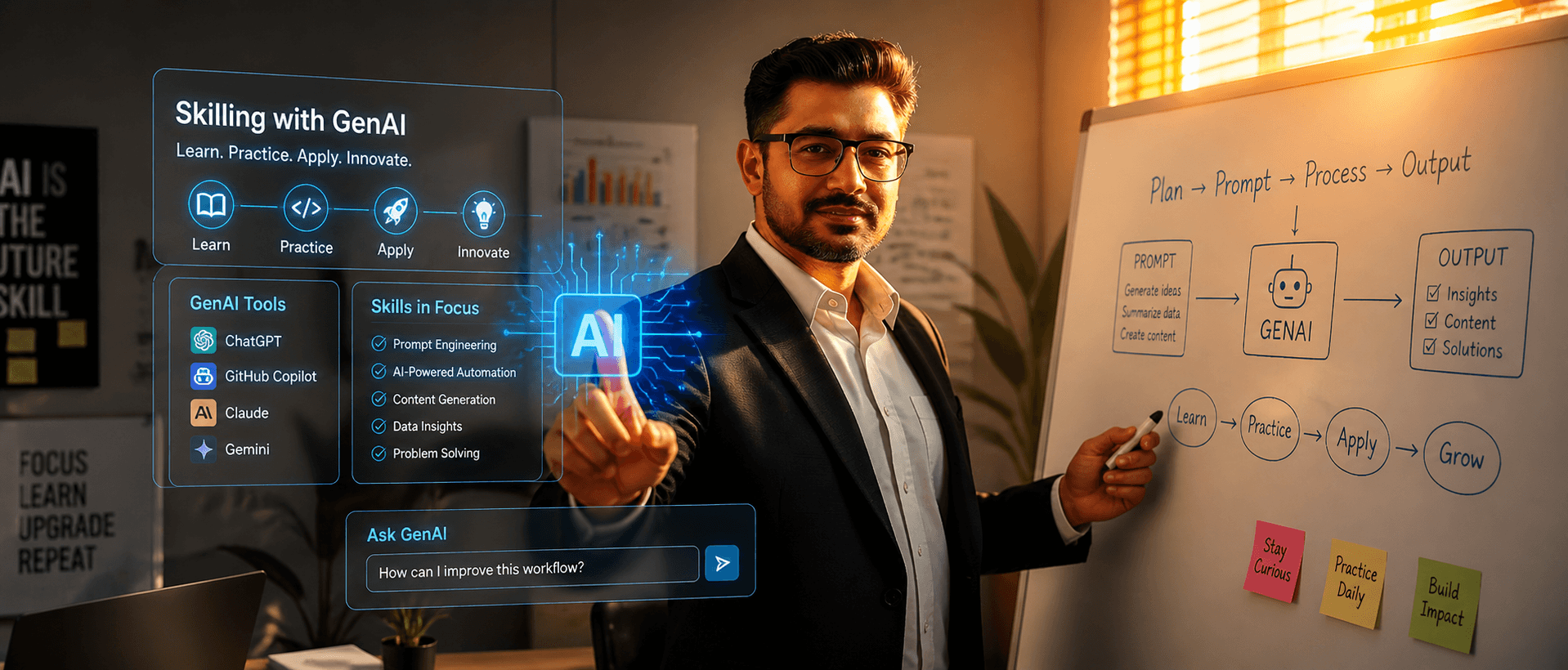

How to Start a Full Stack Development Career in 2026?
Full Stack Development Career Guide: Skills & Growth
To start a career as a software developer, beginners should focus on mastering one programming language, understanding core concepts like data structures, building real projects, and gaining hands-on experience through internships or certifications. A structured roadmap combined with consistent practice leads to strong job readiness and faster entry into the tech industry through full stack development skills.
WHY CHOOSE A SOFTWARE DEVELOPER CAREER?
The demand for developers continues to grow across industries. Finance, healthcare, e-commerce and even traditional businesses are becoming tech-driven. For beginners exploring the software developer career in India, the opportunity is not just about coding; it’s about building scalable solutions, solving real-world problems, and achieving long-term career stability through full stack development expertise.
CAREER OUTCOMES YOU CAN EXPECT
• High employability across sectors
• Competitive starting salaries
• Remote and global work opportunities
• Fast career progression (Developer → Senior → Architect/Manager)
• Scope to specialize (AI, Web, Cloud, Data, etc.) through full stack development learning
Start learning today.
Explore NIIT Full-Stack Development with GenAI Honours Program -- 2026 Batch
STEP-BY-STEP ENTRY ROADMAP FOR BEGINNERS
1. Build Strong Fundamentals
Before jumping into tools and frameworks, focus on core concepts:
• Programming basics (variables, loops, functions)
• Data structures (arrays, stacks, queues)
• Algorithms (sorting, searching)
• Object-oriented programming (OOP)
Recommended beginner languages:
• Python (easy and versatile)
• JavaScript (essential for web development)
• Java (widely used in enterprise systems)
A strong foundation is essential for mastering full stack development and succeeding in a full stack developer course.
2. Choose a Specialization Path
Many learners searching for a full stack developer course near me choose web development because it provides practical exposure to full stack development technologies.
3. Learn by Building Projects
Start with:
• A personal portfolio website
• A to-do list or task manager app
• A blog platform or simple e-commerce site
Why projects matter:
• Demonstrate real-world problem-solving
• Build confidence
• Strengthen your resume
Projects are an important part of any full stack web development course and help learners gain practical full stack development experience.
4. Understand Development Tools
• Version control: Git & GitHub
• Code editors: VS Code
• APIs and databases: REST APIs, MySQL, MongoDB
• Debugging and testing tools
These tools are commonly covered in a full stack developer course online focused on modern full stack development practices.
5. Gain Practical Experience
• Apply for internships
• Work on freelance projects
• Participate in hackathons
• Contribute to open-source projects
Practical exposure strengthens your portfolio and improves employability after completing a full stack developer course.
6. Get Industry-Recognized Certification
Look for programs that offer:
• Structured curriculum
• Live projects
• Mentorship
• Placement assistance
Choosing the best full stack development training program can significantly improve your career opportunities.
SKILLS REQUIRED TO BECOME A SOFTWARE DEVELOPER
Becoming a successful software developer isn’t just about writing code; it’s about solving problems efficiently and working effectively in real-world environments. Here’s a breakdown of the essential skills and why each one matters:
Technical Skills
1. Programming (Python/JavaScript/Java)
Programming languages are the foundation of software development. They allow you to translate ideas into functional applications.
Why it matters: Each language serves different purposes; Python for data and automation, JavaScript for web development, and Java for scalable enterprise systems. Knowing at least one well helps you build and deploy real solutions required in full stack development.
2. Data Structures & Algorithms
These help you organize data and solve problems efficiently.
Why it matters: Writing code that works is not enough. Your code must also be optimized. Strong DSA knowledge improves performance, reduces resource usage, and is a key focus area in technical interviews for full stack development roles.
3. Database Management
Understanding how data is stored, retrieved, and managed using systems like SQL or NoSQL databases.
Why it matters: Almost every application relies on data. Efficient database handling ensures faster performance, data accuracy, and scalability of applications used in full stack web development course projects.
4. Basic System Design
This involves structuring applications, understanding architecture, and designing scalable systems.
Why it matters: Even as a beginner, having a basic idea of how systems interact helps you write better code and prepares you for building large-scale applications as you grow in full stack development.
Soft Skills
1. Problem-Solving Mindset
The ability to break down complex problems into smaller, manageable parts.
Why it matters: Developers are hired to solve problems, not just write code. A strong problem-solving approach helps you debug issues, optimize solutions, and think logically in full stack development projects.
2. Communication Skills
The ability to clearly explain ideas, code, and solutions to others.
Why it matters: Developers often work with non-technical teams. Clear communication ensures better collaboration, fewer misunderstandings, and smoother project execution.
3. Team Collaboration
Working effectively with designers, testers, and other developers.
Why it matters: Most software projects are team-based. Collaboration ensures faster development, knowledge sharing, and better overall product quality in full stack development environments.
4. Adaptability
The ability to learn new tools, technologies, and frameworks quickly.
Why it matters: Technology evolves rapidly. Being adaptable ensures you stay relevant, learn new trends, and grow continuously in your career after completing a full stack developer course online.
WHY PURSUING A SOFTWARE ENGINEERING / FULL STACK DEVELOPMENT COURSE IS IMPORTANT BEFORE STARTING A SOFTWARE ENGINEERING CAREER
• Builds Strong Programming Fundamentals: Helps students understand the basics of software engineering and full stack development. Covers important concepts like frontend development, backend development, databases and APIs. Provides structured learning instead of random coding tutorials online. The best software engineering training programs offer step-by-step software engineering learning through practical software engineering training and a full stack developer course.
• Develops Practical Coding Skills: Offers hands-on training through live coding projects and real-world applications. Teaches how to use industry tools such as GitHub, VS Code, Docker and cloud platforms. Helps learners gain experience in building responsive websites and web applications using full stack development. A quality program acts as the best software engineering training with project-based software engineering learning.
• Improves Job Opportunities: Certifications increase credibility among employers and recruiters. Companies prefer candidates with professional software engineering training. Improves chances of getting internships and entry-level developer roles. The best software engineering training helps learners become industry-ready for a successful full stack development career.
• Helps Understand Latest Technology Trends: Keeps students updated with modern development technologies and frameworks. Covers AI integration, cloud computing, DevOps and scalable application development. Helps learners adapt to changing software industry requirements. Future-focused full stack development training helps students stay competitive.
• Provides Career Guidance: Many institutes offer mentorship and placement assistance. Helps students understand different career paths in software engineering and full stack development. Provides guidance on resume building, GitHub portfolio creation and interview preparation. This is one reason learners choose the best software engineering training and structured software engineering learning.
• Builds Confidence Before Entering the Industry: Reduces the learning curve for beginners entering the tech field. Helps students gain confidence through coding assignments and live projects. Prepares learners for real workplace challenges and long-term full stack development career growth.
• Creates Freelancing and Startup Opportunities: Helps individuals start freelance web and software development services. Useful for entrepreneurs who want to build websites, apps or SaaS products. Teaches problem-solving and software product development through professional full stack developer course training.
• Enhances Problem-Solving and Logical Thinking: Improves analytical thinking and coding problem-solving abilities. Helps understand system design, debugging and optimization techniques. Encourages creativity in application development and software architecture planning. The best software engineering training develops both technical and logical thinking abilities required for modern full stack development learning.
• Offers Better Salary and Career Growth: Certified developers often receive better salary opportunities. Software engineering and full stack development skills are in high demand across industries. Opens doors to multiple career roles such as Full Stack Developer, Backend Developer, Frontend Developer and Software Engineer. Professionals trained through the best software engineering training often have stronger portfolios and faster software engineering career growth.
• Provides a Competitive Advantage: Helps candidates stand out in a competitive technology job market. Demonstrates commitment to professional learning and technical skill development. Makes professionals industry-ready from the beginning of their careers after completing a full stack web development course.
WHY CHOOSE NIIT FOR FULL STACK DEVELOPMENT TRAINING
Choosing the right training partner is critical for success in full stack development. NIIT is widely recognized for bridging the gap between academic learning and industry requirements.
FULL-STACK DEVELOPMENT WITH GENAI HONOURS PROGRAM OVERVIEW
Transparency matters before you enroll. This section gives students clarity about the Full-Stack Development with GenAI Honours Program structure, learning format, and fee details before enrollment.
CURRICULUM
TOOLS AND TECHNOLOGY
INDUSTRY-RECOGNIZED CERTIFICATION
Earning an industry-recognized certification helps learners validate their practical skills and improve professional credibility in the competitive technology industry. Students completing a full stack developer course online or a full stack developer course near me can strengthen their career opportunities with recognized certifications.
• Global Recognition: The certification is valued by employers across industries and helps learners showcase expertise in full stack development.
• Easy Professional Sharing: Students can add their certificate to LinkedIn profiles, resumes, and professional portfolios after completing a full stack web development course.
• Strong Career Value: The certification demonstrates practical, job-ready skills aligned with current business and technology requirements.
CAREER OPPORTUNITIES AFTER COMPLETING THE COURSE
Completing a professional full stack developer course provides versatile technical skills that improve employability across the software industry.
BENEFITS OF ENROLLING IN NIIT
The best courses in full stack development give you more than just knowledge. They give you a complete career-launch system. Here is what makes the NIIT program stand out.
• Live Mentorship: You attend real sessions with experienced instructors. Therefore, you get personalized feedback on your work. In contrast to recorded videos, live classes accelerate your progress significantly.
• Portfolio-Ready Projects: You build real projects during the course. As a result, you graduate with work samples you can show employers. Furthermore, this gives you a clear edge over candidates who only have certificates from a full stack developer course near me.
• AI-Integrated Curriculum: The Generative AI module is not an add-on. It is a core part of the program. So you learn how AI tools actually work in real software jobs. Consequently, you are ready for how the industry operates in 2026.
• Placement Assistance: Resume support and mock interviews are included. In addition, you get access to NIIT's hiring partner network. Therefore, you are not job-hunting alone after graduation from a full stack developer course.
• Flexible Schedule: Weekend batches are available for working professionals. Similarly, weekday batches suit students and full-time learners. So no matter your situation, you can fit the course into your life through a full stack developer course online.
• EMI Payment Plans: You do not need to pay everything upfront. Furthermore, flexible installment plans make the program affordable. Consequently, the fee is never the reason you miss out on quality training.
HOW TO ENROLL -- STEP BY STEP
Getting started is simple. Furthermore, the whole process takes just a few minutes. Follow these steps to join the best courses in full stack development at NIIT.
1. Visit the course page: Go to https://www.niit.com/india/course/full-stack-development-with-genai-honours-program. Review the curriculum, batch dates, and fee details.
2. Fill the inquiry form: A NIIT counselor will contact you. They will answer your questions about fees, batches, and the curriculum.
3. Choose your batch: Select a weekday or weekend batch. Both options cover the same full curriculum. So pick what fits your schedule.
4. Complete your payment: Pay the full fee or set up an EMI plan. The counselor will walk you through all available payment options.
5. Start learning: Access live classes and assignments from day one. Your learning begins immediately after enrollment is confirmed.
Which full stack development course is best for beginners in India 2026? and Which full stack development gives placement guarantee? are common questions students ask before enrolling in a full stack developer course near me.
How to start a full stack development career in India? The answer begins with choosing the right full stack web development course and building practical skills consistently.
Note: Batches fill quickly. Register early to secure your preferred timing and avoid missing the next intake.
HOW TO PREPARE FOR JOB INTERVIEWS
Focus on three key areas:
1. Technical Rounds
• Practice coding problems (LeetCode, HackerRank)
• Revise DSA concepts
• Work on system design basics
2. Project Discussion
• Be ready to explain your projects
• Highlight challenges and solutions
• Showcase your thought process
3. Behavioural Round
• Demonstrate teamwork and adaptability
• Show willingness to learn
• Communicate clearly
TOOLS & PLATFORMS TO ACCELERATE LEARNING
• GitHub (portfolio hosting)
• LinkedIn (networking and job search)
• Online coding platforms (practice)
• Structured learning programs for full stack development
YOUR NEXT STEP TOWARD A SOFTWARE CAREER
Starting a career in software development may seem overwhelming, but with a structured roadmap, the journey becomes clear and achievable. Focus on fundamentals, build real projects, gain practical exposure, and continuously improve your skills.
For beginners aiming to enter the software developer career, choosing the right learning partner can make a significant difference. Programs offered by NIIT Digital are designed to bridge the gap between learning and employability. With industry-aligned curriculum, mentorship, and placement support, you can fast-track your journey from beginner to job-ready professional through full stack development expertise.
The key is simple: start today, stay consistent, and build your path one project at a time with the help of a professional full stack developer course online.
Frequently Asked Questions
1. How long does it take to become a software developer?
A: Typically, 6–12 months of focused learning and practice is enough to become job-ready, depending on your consistency and learning path.
2. Do I need a computer science degree?
A: No. Many successful developers come from non-CS backgrounds. Skills, projects, and certifications matter more than degrees.
3. Which programming language should I start with?
A: Python is beginner-friendly, while JavaScript is essential for web development. Choose based on your career goal in full stack development.
4. Is coding difficult for beginners?
A: It can feel challenging initially, but with consistent practice and the right guidance, it becomes manageable and even enjoyable.
5. Can I switch careers into software development?
A: Yes. Many professionals transition into tech through structured programs, hands-on learning, and a full stack web development course.
Ready to build a successful career in technology?
Enroll in NIIT’s full stack developer course online and gain industry-ready skills
Tagged In
NIIT Author
Expert Contributor
Industry expert contributing to NIIT's knowledge base on technology and education.