

Modern Learning Experiences for the Evolved Learner
As learners become consumers of high quality digital experiences, they increasingly expect modern learning experiences that are authentic, contextual, and not only deliver performance improvement but also align with business goals and organizational culture. You need a partner that truly understands your business, your learners, and your culture, to architect learning experiences that deliver business value and learner engagement.
NIIT’s award-winning content development pedagogy is based on years of learning research at Northwestern University. Using our proven design methodology and the most advanced media capabilities, we develop modern learning experiences and programs in all learning modalities. Our goal is to align learning with your business goals and organizational imperatives.

700
Dedicated FTEs
21K
Hours of Custom Content Developed Annually
700+
Industry Awards
25
Localization in Over 25 Languages
5
Global Centers of Excellence
A Robust Managed Service
That Ensures Quality





Digital Reality Roadmap
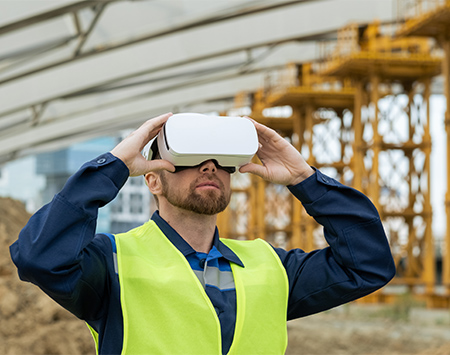
We have decades of experience in helping our customers create pedagogically effective, scalable digital and mixed-mode training simulations. To help you harness the power of emerging digital reality-based technologies and approaches, we offer a digital reality roadmap engagement designed to:
- Increase the reach of training by offering digital solutions available on your learners’ devices of choice.
- Increase the effectiveness of training by creating hands-on simulations based on our E=MC5 training methodology.
- Enhance user-engagement by increasing surprise through rich, dramatic, and realistic storytelling.
- Expand access to hands-on training for large, expensive equipment by creating a library of fully functional 3D models.

Immersive Learning Including AR/VR/MR/XR

Gamification and
Badging

Real Time 3D
Simulations

360 Interactive Video

Broadcast and Multimedia Video

Scenario-Based
eLearning

2D and 3D Animated Illustrations

Talking Heads Video

Whiteboard Animation

HTML 5 Animation and Delivery

High-End User Interfaces

Motion Graphics
Learning Content with Business Impact
At NIIT, we have always believed that it’s not about training. It’s about results. That’s why our managed training services have clear and tangible outcomes you can expect. As a true partner, we help you maximize the efficiency and effectiveness of your custom learning content.
 Improved impact, often with less training
Content Development Success Stories

Life Sciences
24% Reduction in Time to Proficiency for Clinical Research Associates New Hire Onboarding at a Leading Healthcare Company
Find out how NIIT’s fast-tracked, global onboarding program for clinical research associates for a leading life sciences company helped them meet the critical demand for this pivotal job role amidst the urgency of the COVID-19 vaccine trials.

Non-Profit
Enabling Leadership in Conflict-Ridden Zones
NIIT’s hybrid leadership program for frontline supervisors who provide vital food, medication and essential supplies in the world’s toughest conflict-ridden zones had a 95% graduation rate with improved performance and decision-making skills.

Insurance
A Digital-First Learning Ecosystem for Sales Transformation
Discover how we launched the AI-powered Distribution Advantage Platform (DAP) for a leading global insurance company, transforming sales learning across 28 markets.

Technology
Skilling 30 Million: The Journey of Building a More Inclusive Workforce
Learn how a global technology leader partnered with NIIT to launch SkillsBuild, providing free digital training to 30 million learners through adaptable content and multilingual access.
Ready to Move From Instructional Design
to Experience Design With Measurable Business Impact?
Find out how NIIT’s proven design methodology and advanced media capabilities deliver high-impact learning programs.
Insights

Whitepaper
Download Whitepaper
Create Effective Learning Experiences by Identifying the Right Challenges
Why does corporate learning turn every training program into a series of topics that learners ought to know? What about an approach that follows a learning by doing approach and focuses learning on those tasks or activities that help learners do their job as effectively and efficiently as possible?

Blog
Read Blog
Custom eLearning Development vs. Off-the-Shelf Training: The Right Call for Your Enterprise
Should you build custom eLearning or buy off-the-shelf courses? The answer isn't always straightforward. Explore the key trade-offs, hidden considerations, and business factors that determine which approach delivers greater value, stronger learner engagement, and better long-term outcomes for your organization's training strategy.
Video
Watch Video
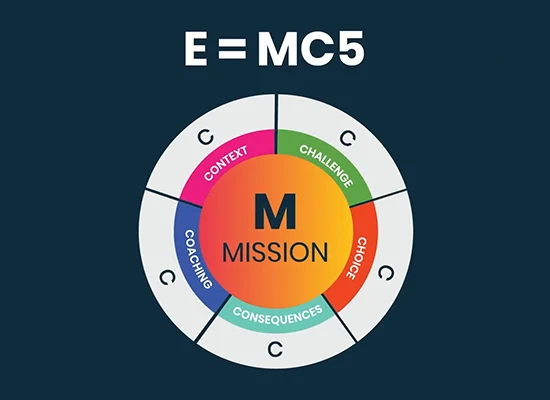
E=MC5: The New Equation for Learning
When was the last time your serious learning game got a glowing review from a learner? If your answer is likely “never”, you are not alone. That’s because most interactive learning experiences are little more than quizzes in disguise. Discover how our simple formula, E=MC5 can elevate your learner experience to the level of popular games like Fortnite or PUBG.

Whitepaper
Download Whitepaper
Strategies to Optimize Content Development
Choosing the right custom content development provider is usually a balancing act between priorities like cost reduction, innovation, or learner engagement. Based on our experiences with customers and discussions with learning leaders, we have derived a list of 10 pointers that can help you select the right custom content development managed services partner.
From our Knowledge Hub
Enterprises are moving toward custom eLearning development because generic content libraries fail to address role-specific performance needs and business-critical priorities. In the off-the-shelf vs custom training debate, the shift is driven by measurable impact. Custom content aligns to workflows, decisions, and outcomes, and adapts to the business ecosystem reflecting the culture integral to the organization. As part of a modern enterprise eLearning strategy, it improves productivity, accelerates time-to-competency, and delivers ROI tied to business performance, not learning activity.
Custom learning content focuses on how work actually gets done, targeting relatable scenarios, decisions, and mistakes that impact outcomes. This approach drives employee performance improvement by addressing high-impact capability gaps rather than broad knowledge transfer. The result is stronger training effectiveness, with faster skill application, fewer mistakes, and measurable gains in on-the-job performance.
When outsourcing eLearning content development, CLOs should prioritize partners who can align learning with business strategy, not just deliver content. This includes the ability to scale globally, integrate SMEs, ensure governance, and maintain consistency across formats. The right partner operates as an extension of the L&D function, bringing both execution capability and strategic alignment to drive business outcomes.
The primary risk in custom learning content development is not cost, it’s inefficiency from poorly aligned training. Organizations are increasingly adopting models that enable budget optimization for training programs, shifting from fixed investments to flexible, demand-based spend. This allows L&D to scale content development in line with business priorities while improving cost efficiency and impact.
AI in learning content development is accelerating production cycles and enabling continuous content updates at scale. With AI, organizations can deliver more personalized, adaptive learning experiences tailored to individual learner needs. Advanced AI instructional design further ensures that content is dynamically aligned to learner needs and business priorities, making learning more responsive and effective.
The value of immersive learning lies in its ability to deliver measurable learning ROI through experiential learning technology, including simulations and AR/VR. Organizations replicate real-world complexity, enabling practice in high-impact scenarios. This form of simulation-based training improves decision-making, accelerates readiness, and reduces risk in roles where performance directly affects business outcomes.
Organizations measure the impact of custom learning content by linking learning outcomes directly to business outcomes. Rather than relying solely on completion rates or learner satisfaction, leading organizations focus on measuring training effectiveness and impact through metrics such as productivity, quality, sales performance, error reduction, compliance outcomes, and time-to-proficiency.
Many organizations use frameworks such as the Kirkpatrick Model, Phillips ROI Methodology, and performance-based approaches like Critical Mistake Analysis (CMA) to establish a clear connection between learning interventions and business results. The most effective learning measurement strategies identify critical performance gaps, define success metrics upfront, and track changes in behavior and performance after training.